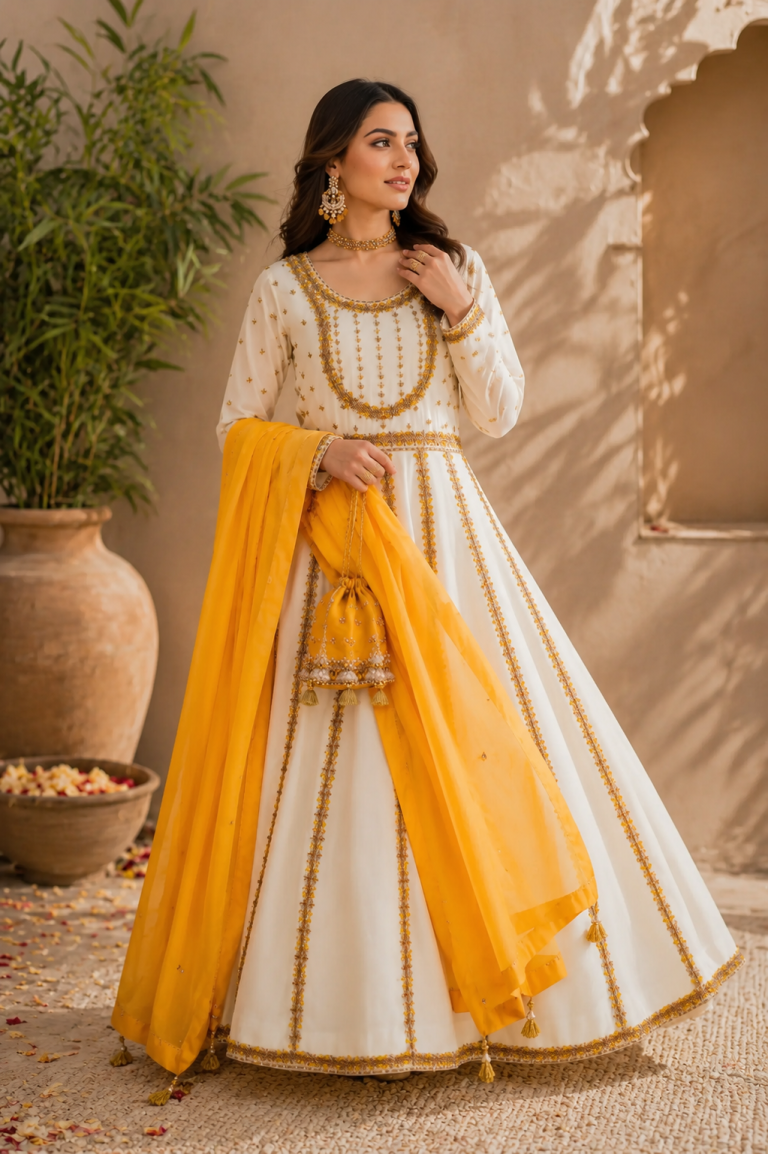
Curating a wedding trousseau is one of the most intimate and transformative style journeys a woman will ever undertake. For decades, the South Asian bridal trousseau was defined by sheer accumulation: trunks filled with dozens of heavily embellished suits, rigid formal wear, and ceremonial silhouettes that were worn once during the wedding week and subsequently relegated to cedar chests. However, the contemporary Pakistani bride approaches her wardrobe with a refined, discerning sensibility. She values emotional resonance, wearable versatility, and timeless craftsmanship over ostentatious volume.
The modern trousseau is not a static museum collection; it is a dynamic, living wardrobe designed to support the bride through ceremonial milestones, post-wedding dinners, formal receptions, and family celebrations for years to come. In this comprehensive bridal guide, the Nooraiza styling team outlines the architecture of an enduring, elegant trousseau that harmonizes generational heritage with effortless contemporary poise.
The Three Pillars of an Enduring Bridal Trousseau
Before selecting individual colors or embroidery swatches, every prospective bride should evaluate her wardrobe through three fundamental criteria:
- Silhouette Versatility: Can a formal shirt be paired with tailored raw silk cigarette trousers for an intimate dinner, or styled with a voluminous crushed organza sharara for a family wedding? Pieces that function as modular separates provide infinitely more value than rigid, one-piece gowns.
- Fabric Longevity: Synthetic blends like polyester georgette and nylon crepe may mimic high sheen in showroom lighting, but they lack breathability, feel suffocating under celebratory lighting, and degrade after a few dry cleans. Pure natural textiles—such as 80g pure raw silk, handloom katan silk, and breathable pure chiffon—maintain their structural integrity and drape for decades.
- Timeless Color Harmony: While neon hues and trend-driven pastels dominate social media feeds for a season, regal classics—imperial ivory, deep crimson, antique emerald, burnished gold, and dusty tea rose—never lose their evocative power in wedding photography.
The Core Bridal Trousseau Architecture: 5 Essential Ensembles
Rather than purchasing twenty semi-formal pieces that duplicate the same aesthetic, we recommend structuring your trousseau around five core ceremonial categories:
1. The Heirloom Ceremonial Statement (Barat / Main Ceremony)
This is the emotional anchor of the entire trousseau. Whether you choose a classic crimson lehenga, a royal kalidaar, or an architectural peshwas, this piece should feature authentic hand embellishments—zardozi, dabka, nakshi, and antique tilla. Prioritize timeless motifs inspired by South Asian architecture: mughal arches, jali lattice work, and flowing botanical vine arabesques. Discover our bespoke approach to bridal couture in the Nooraiza Bridal Edit.
2. The Modern Pastel Reception Ensemble (Walima / Dinner Gala)
Walima aesthetics lean toward serene grandeur. Silhouettes like layered peshwas, floor-grazing flared gowns, and structured kalidaars rendered in luminous hues—seafoam mint, dusty lavender, oyster ivory, or soft blush—create a captivating visual departure from the intense ceremonial tones of the Barat. Look for delicate pearl embellishments, fine cutwork, and iridescent mukesh work that glows softly under ambient banquet lighting.
3. The Joyful Mehndi & Sangeet Festive Look
Mehndi celebrations are vibrant, musical, and kinetic. Your trousseau requires at least one outfit engineered specifically for joyous movement. Flared shararas paired with short angrakhas or sleeveless kurtas in mango yellow, chartreuse green, or magenta allow you to dance freely. The embellishments should focus on lighter, luminous techniques—gotapatti, mirror work, and colorful resham embroidery—that won’t weigh down the garment during festivities.
4. The Day-Festive Nikah Formal
Daytime wedding ceremonies and morning Nikahs call for an aesthetic of pure serenity. Pure ivory raw silk suits, delicate chikankari embroidered kurtas paired with hand-painted organza dupattas, or gold-accented kalidaars capture natural daylight flawlessly. For daytime celebrations, avoid heavy metallic chunks and opt instead for fine bullion needlework and whisper-soft sheer draping.
5. The Post-Wedding Dinner Capsule (3 to 4 Luxury Formals)
The weeks following your wedding will involve formal dinners with extended family, intimate gatherings, and post-wedding festivities. A set of three to four impeccably tailored Luxury Formals in sophisticated jewel tones—deep sapphire, aubergine plum, rich olive, and midnight black—gives you effortless confidence without requiring hours of complicated styling.
Fabric Selection: The Foundation of Trousseau Comfort
Wedding season in Pakistan spans from crisp winter evenings in Lahore and Islamabad to temperate, balmy days in Karachi. Understanding how textiles behave across climates ensures you remain poised and comfortable throughout exhausting schedules:
| Fabric | Weight & Drape | Best Suited For | Seasonal Fit |
|---|---|---|---|
| Pure Raw Silk (80g) | Structured, sculptural, holds pleats crisply | Shirts, straight trousers, lehengas | Autumn, Winter, Spring |
| Pure Chiffon | Featherlight, fluid, cascades organically | Dupattas, tiered shararas, flowy capes | All Seasons (Breathable) |
| French Organza | Voluminous, translucent, airy structure | Statement sleeves, sheer borders, dupattas | Spring, Summer, Autumn |
| Handloom Velvet | Dense, sumptuous, rich light absorption | Shawls, winter kurtas, evening jackets | Peak Winter |
The Art of the Statement Dupatta
In South Asian luxury fashion, the dupatta is not merely an accessory; it is the crowning glory of the ensemble. A versatile, hand-embroidered statement dupatta in gold tilla or antique resham can transform a minimalist silk tunic into an arresting ceremonial statement.
When curating your trousseau, invest in at least two heritage dupattas—one in metallic tilla or kamdani on pure tissue, and another in hand-embroidered organza with scalloped borders. These two pieces can be restyled over simple unadorned silk kurtas, instantly creating five new outfits for dinner invitations without needing entirely new ensembles.
Trousseau Packing and Archival Care Checklist
- Pack Outfits by Event: Organize your trousseau into designated muslin garment bags labeled with event tags (e.g., “Post-Wedding Dinner 1,” “Family Dawat”). Include matching inner slips, belts, and accessories in transparent pouches inside each bag.
- Use Acid-Free Tissue Paper: Fold delicate dupattas and embroidered sleeves with sheets of acid-free tissue paper placed between the folds. This cushions the metallic threads and prevents friction snagging during transport.
- Avoid Mothballs Directly on Silk: Chemical mothballs leave persistent odors and can degrade natural silk proteins. Use natural cedar blocks, dried lavender sachets, or neem leaves placed along the interior perimeter of your wardrobe trunks.
- Familiarize Yourself with Care Policies: Ensure you understand safe handling and cleaning guidelines before travel. Review our atelier Garment Care & Support for specialized fabric advice.
Frequently Asked Questions on Bridal Trousseaus
How many outfits should be included in a modern Pakistani bridal trousseau?
While traditional trousseaus often numbered 25 to 30 suits, modern brides find that a curated capsule of 8 to 12 high-quality, versatile pieces is far more practical. This includes the main wedding ceremonial outfits plus 4 to 6 post-wedding luxury formals that can be mixed, matched, and re-worn over the first year of marriage.
How far in advance should I order my bridal trousseau?
Bespoke bridal wear with extensive handcrafting requires 3 to 5 months from initial consultation to final delivery. Post-wedding luxury formals typically take 4 to 8 weeks. We recommend starting your consultations at least 6 months prior to your wedding date to allow ample time for personalized fittings and accessory styling.
What color palette works best for evening bridal receptions?
For evening galas, metallic pastels (champagne, silver-sage, iced lilac) and jewel tones (midnight emerald, royal indigo, deep garnet) produce extraordinary depth under photography strobes and chandeliers. Warm gold and antique silver embroidery reflect stage lighting beautifully without blowing out the camera exposure.
Your bridal trousseau is the beginning of your family’s sartorial legacy. By investing in craftsmanship, natural fibers, and timeless silhouettes, you ensure that every piece you step into brings back the golden radiance of your wedding celebrations. Discover bespoke heirloom curation at the Nooraiza Collection.