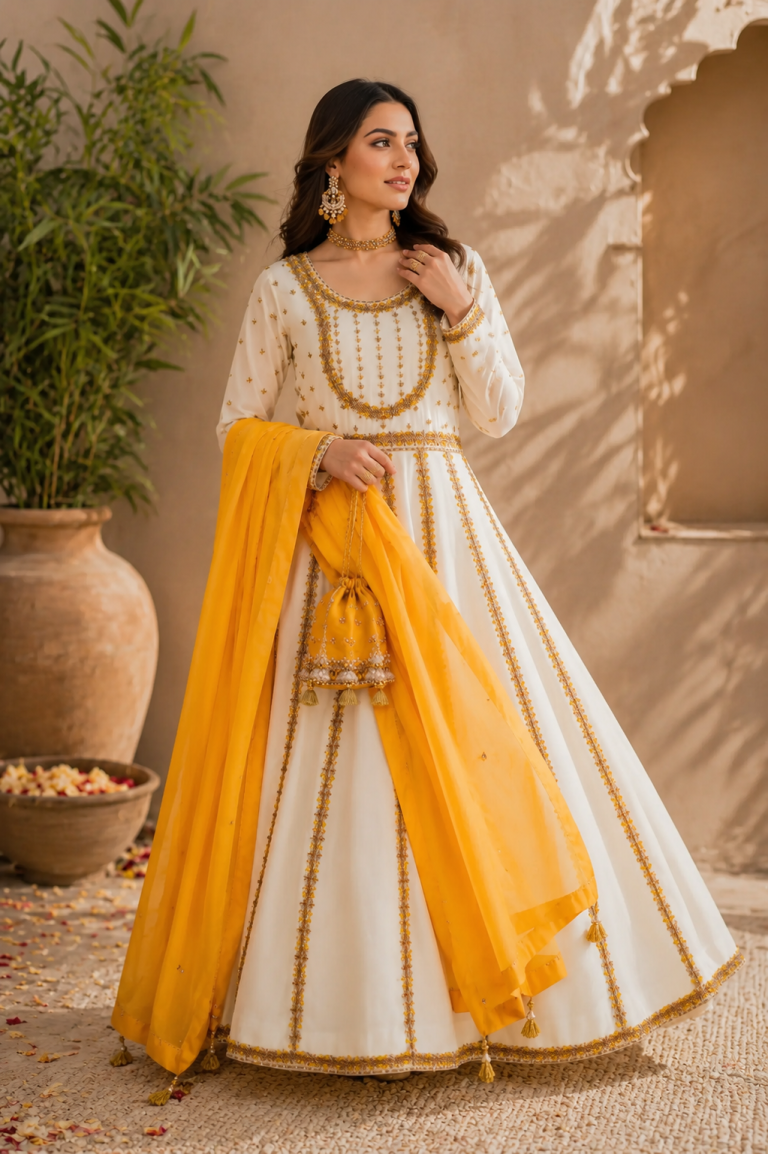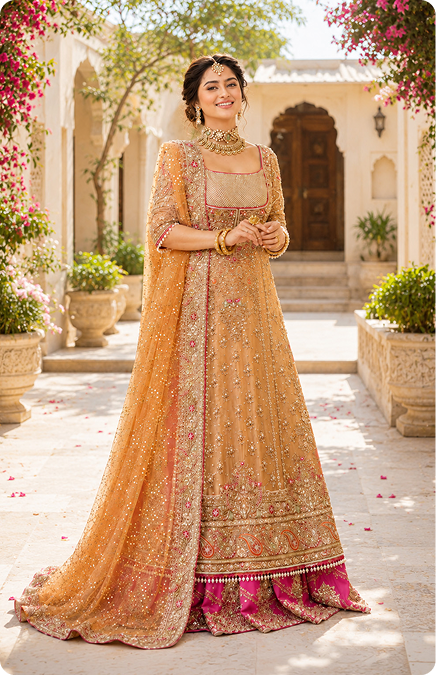
In the world of high fashion and couture, luxury begins not on the designer’s sketchpad, nor in the embroidery frame, but at the tip of the fingers. Before a single bullion wire is couched or a silhouette is sculpted, the textile dictates whether an ensemble will evoke regal poise or merely look decorative in passing. South Asian couture is fundamentally celebrated for its mastery of sensory textiles: the architectural crispness of handloomed raw silk, the ethereal, whisper-soft descent of pure chiffon, and the diaphanous, airy volume of French organza.
Yet in an era where synthetic microfibers, polyester georgettes, and artificial nylon organzas permeate the fashion marketplace, understanding the anatomy of genuine natural fibers has become the true hallmark of the discerning collector. In this authoritative fabric analysis, the Nooraiza textile atelier breaks down the physics, sensory feel, and occasion suitability of the three foundational fabrics that define modern Pakistani luxury.
1. Pure Raw Silk: The Dignity of Handloomed Structure
Raw silk (often woven from pure mulberry silk filaments that retain a percentage of their natural sericin protein) is the undisputed sovereign of formal occasionwear. Unlike synthetic satin, which exhibits an artificial, oily glare, authentic raw silk radiates a subtle, sophisticated luster that changes character depending on whether it is viewed under natural daylight or warm candlelight.
The Architecture of the Slub
The defining visual and tactile signature of genuine raw silk is the presence of slubs—slight, organic horizontal variations in thread thickness resulting from the hand-spinning and hand-looming process. These irregular textures are not defects; they are the literal fingerprint of the human weaver. High-grade 80g and 100g raw silk possesses sufficient internal body and tensile resilience to support intricate hand-laid Luxury Formals embroidery without sagging, stretching, or buckling along seam lines.
Performance in Silhouettes
Raw silk is celebrated for its sculptural memory. When pressed into crisp pleats, tailored into cigarette trousers, or cut into a tailored straight kurta, it maintains clean, architectural lines that flatter the posture. It is naturally temperature-regulating: insulating against evening chill during winter wedding receptions while remaining breathable during temperate spring soirees.
2. Pure Chiffon: The Poetry of Fluid Movement
If raw silk provides the architectural skeleton of an ensemble, pure silk chiffon provides its soul. Derived from tightly twisted silk crepe yarns woven in a sheer, plain weave, chiffon is defined by its kinetic fluidity. A well-constructed chiffon dupatta does not merely rest on the shoulder; it floats, cascades, and billows with every step, creating the iconic cinematic elegance of South Asian formalwear.
The Touch Test: Pure Silk vs. Polyester Chiffon
Discerning buyers can easily differentiate pure silk chiffon from synthetic imitation through a simple sensory assessment:
- Thermal Conductance: Touch the fabric against your cheek. Pure silk chiffon feels cool initially and rapidly warms to skin temperature. Polyester chiffon feels immediately room-temperature, slippery, and noticeably non-porous.
- Light Dispersion: Synthetic chiffon produces a glassy, synthetic shine under camera flash. Pure silk chiffon has a delicate, pebbled crepe texture that diffuses light softly, eliminating harsh reflections in professional wedding photography.
- Static and Cling: Synthetic fabrics generate static electricity, clinging awkwardly to leggings and trousers. Pure natural silk never generates static; it falls perpendicular to gravity, creating clean, elongating vertical lines.
Occasion Styling
Pure chiffon is the premier textile for grand celebratory dupattas, gathered sharara layers, and draped sari silhouettes. Its delicate nature makes it the ideal canvas for intricate mukesh (badla), fine tilla borders, and delicate resham floral sprays. Explore our flowing silhouettes in the Wedding Formals Collection.
3. Pure Organza: Translucent Volume and Sculptural Drama
Organza is a crisp, lightweight, plain-weave fabric traditionally woven from continuous filament silk. Its signature attribute is its crisp hand and sheer transparency, allowing designers to create captivating optical depth through layering, sheer panels, and dimensional sleeves.
The Craft of Pure Silk Organza
Authentic silk organza achieves its characteristic firmness not through chemical plasticizers, but through the natural tension of tightly twisted silk fibers. Consequently, high-end silk organza bends softly and organically around the wrists and shoulders without creating harsh, scratchy creases. Synthetic nylon organza, by contrast, feels abrasive against sensitive skin, makes an audible rustling sound when walking, and leaves permanent, sharp white folds if bent.
Techniques That Shine on Organza
Organza provides an extraordinary foundation for decorative textile artistry:
- Cutwork (Khaaka): Intricate botanical motifs where the embroidery is laid down first, and the negative space of the sheer organza is painstakingly burned or excised by hand to produce lace-like openwork.
- Sheer Sleeves and Necklines: Offering modest yet alluring coverage, sheer organza sleeves bordered with zardozi cuffs create modern, light-infused bridal silhouettes.
- Layered Peplums and Dupattas: Layering an embroidered organza tunic over an opaque raw silk inner creates a three-dimensional depth where light penetrates the top layer and bounces off the silk beneath.
Comprehensive Fabric Comparison Matrix
| Textile Attribute | Pure Raw Silk | Pure Chiffon | Pure Organza |
|---|---|---|---|
| Tactile Texture | Structured, slubbed, substantial body | Whisper-soft, pebbled crepe, fluid | Crisp, smooth, airy, translucent |
| Embroidery Capacity | Heavy zardozi, tilla, bullion, pearls | Light-to-medium tilla, mukesh, resham | Cutwork, sequin work, threadwork |
| Breathability | High (natural protein fiber) | Exceptional (open weave) | Moderate-to-High (open weave) |
| Best Silhouette | Straight kurtas, tailored pants, kalidaars | Flowing dupattas, tiered shararas, saris | Statement sleeves, sheer dupattas, capes |
Why Synthetic Fabrics Can Never Equal Natural Luxury
The fast-fashion revolution has led many commercial brands to substitute natural silks with petrochemical derivatives: polyester, nylon, and acrylic. While synthetics are cheap to manufacture, their drawbacks in formal occasionwear are severe:
- Lack of Breathability: Synthetic fibers trap body heat and sweat. Under hot wedding banquet lighting or during summer festivities, a synthetic dress acts as a thermal barrier, causing discomfort and staining.
- Dye Absorption and Longevity: Natural silk fibers absorb natural and acid dyes into the very core of the protein strand. This produces rich, dimensional colors with deep luster that do not fade over time. Synthetics hold dye on the exterior surface only, looking flat and chalky under sunlight.
- Environmental Biodegradability: Pure silk is an organic, biodegradable material that honors the earth. Synthetic garments shed microplastics with every wash and persist in landfills for centuries.
Frequently Asked Questions About Luxury Fabrics
How do I test if my garment is pure silk at home?
The definitive non-destructive test is sensory: pure silk warms rapidly to the touch, possesses organic variations in luster, and produces no static electricity. The industry-standard laboratory test is the “burn test” (performed only on an unexposed raw seam snippet): pure silk burns slowly with the aroma of singed hair, leaving a crushable black ash, whereas synthetic polyester melts rapidly into a hard, plastic bead with a chemical odor.
Can raw silk shrink when dry cleaned?
Pure raw silk should only be cleaned by professional dry cleaners experienced in luxury ethnic couture. Never immerse raw silk in water, as water alters the natural sericin bond, causing shrinkage and water-spot discoloration. Always inform your cleaner of any delicate metal embroidery.
How do I prevent organza dupattas from snagging on heavy jewelry?
Because organza is a delicate plain-weave textile, ensure that your necklace clasps, rings, and bangles have smooth prongs without loose metal edges. When draping an embroidered organza dupatta over one shoulder, secure it with a fabric-friendly pearl pin on the inner shoulder seam rather than piercing the sheer center field.
Every garment created at Nooraiza is built upon an unwavering respect for authentic, high-grade natural textiles. Experience the incomparable sensory difference of real silk by browsing our complete Atelier Collection.